Translate This Blog

Animals At The Stock Market

As most everyone knows, the stock market is that place “where shares are issued and traded either through exchanges or over-the-counter markets” at an agreed price. These stocks or shares are securities listed on the stock exchange.
The stock market (also known as the equity market) is one of the most important sections of a market economy. It is one of the important sources for companies to raise money for their expansion or capital infusion.
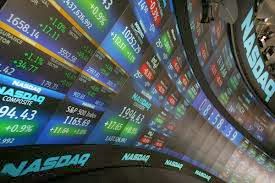
Animals At The Stock Market
Sometimes, this market is split into two parts – the primary and the secondary market. New issues are first offered at the primary market. The subsequent trading is done at the secondary market.

Question: Where are the animals coming from?

It is said that on Wall Street, the bulls and bears are in a constant struggle. Actually, the animal names are simply nicknames on certain situations and kinds of people in the stock market business.

Bull

When everything in the economy is in tiptop shape, when people have jobs, when the gross domestic product (GDP) is growing and the stocks are rising – it is a bull market.

This is the time when everything is coming up roses in the stock market. This is also the easiest time of the year to pick stocks because everything is going up.
Animals At The Stock Market

Bull markets cannot last forever, though. Because things were looking good in the bull season of the market, it sometimes can lead to dangerous situations if the stocks become overvalued.

The “bull” connotation had jumped fence and is now into mainstream lingo. If a person is optimistic and believes that stocks will go up, that person is called a bull. His attitude had been called all these years as having a “bullish outlook.”

Bear

The bear is the opposite of the bull. In a bear market, recession is looming and the prices of stocks are falling. Bear markets is a tough time for investors to pick profitable stocks.

Some experienced stock brokers sometimes resort to making money. They would use a technique called “short selling.”
Animals At The Stock Market

Another strategy is to wait out the bear market on the sidelines, anticipating the return of the bull market. If a person is pessimistic or thinks the stocks are going to drop again, that person is called a “bear”, and is now labeled as having a “bearish outlook”.


Animals At The Stock MarketChicken

Chickens are those who are deathly afraid of losing anything. Their fear blankets their need to make profit. Consequently, they would turn only to money-market securities. (Some get out of the market entirely.)

While it is true that one should never invest into something which you will lose sleep, it is also true that you will never see any return if you avoid the market completely and do not take risks.

Pigs

Professional traders love the pigs – it is from their losses that the bulls and the bears collect their profits.

Pigs are those investors who love high risks, and are always looking for that one big score in a short period of time. They buy on hot tips and invest without doing thorough research.
Animals At The Stock Market

Usually, they are impatient and greedy about their investments. They are usually drawn to high-risk securities without putting time and effort to learn about their investments


Assuming these animals’ characteristics in the stock market, what kind of investor would you be? 

Surviving The Stock Market

If you are one of those who are trying to get his or her luck in the stock market by trading, then the best thing that you could do is to familiarize yourself with the nature of the venture.
It is best if you have already mastered the basics when it comes to stock market and trading so you will know exactly what are you getting into. If you are already armed with the basics, then you could somehow estimate where your involvement in stock trading could take you.
The keys to success
Surviving The Stock Market

If you are not careful and prepared enough, chances are you are not going to make it in stock market. This is because the industry—being the largest in the world that generates billions of transactions non-stop—takes a lot of knowledge, experience, guts, and decisiveness in order to be successful.

To be able to become successful in the stock market, one must be very wise in dealing with transactions. One must also know where to trade, the peak season for the trading, the techniques to be used, and the updated strategies to generate as many transactions as possible.

Aside from the qualities mentioned, you can survive the world of trading in stock market if you:

- have the ability to decide on the length of the transactions. This is very, very crucial for a trader to ensure that he or she still has a portion of the market that can be penetrated. A successful smart trader should decide first if he or she would go long term or short term on the process. This is a very crucial decision because it will somehow give direction to the transaction and will somehow give a hint, which one will be very successful for you.
Surviving The Stock Market

- controlling emotions. The biggest problems that majority of the traders in the stock market are having the idea what to expect in the industry. Studies show that the biggest problem that most people in trading stocks experience is dealing with their emotions.

- have enough guts to start big. Although short term stock trading can do a beginner good—by closing transactions in short period of time—it will do them bad in the future because these have no stability. They say that it is better to plot a stock and trade it to ensure that this is where the direction and stability can be seen.
Surviving The Stock Market

- have the ability to detach from emotional baggage. This is indeed very hard because most of the time—especially in the times of need to generate transactions—traders become anxious that there will be no transaction that will take place within the day. There are also those that let their emotions rule over their rational thinking, which usually leads to incorrect means of dealing with the problem at hand. Although it's human nature to experience certain levels of emotional dilemma, it is best to detach yourself from these if you really want to be successful in the stock market. 

Reaping Rewards From The Stock Market

Many people say that to be successful in the stock market, the most important thing that you should realize is you capability to survive in this dog-eat-dog-world industry. This means that knowing what you really want and being ready to face all the challenges and difficulties that come along with the industry.
Nowadays, the number of people who engage in trading for the stock market continues to increase for the simple reason that the money investment could flourish in no time. But since trading in the stock market is business itself, it takes a wise and practical trader to reap rewards from it.
If you want to reap the rewards of trading in stock market in no time then you should know how to start small. The stock market or stock trading is considered as one of the most viable sources of income there is.
Reaping Rewards From The Stock Market

Compared to other industries, trading in the stock market can make a person or a trader a millionaire for just one whole day transacting. This is because the type of the type of training concerns,

Trading stocks is believed to be the most successful industries one can get into for as long as he or she has the skills, the knowledge, the ability, the enthusiasm, and the drive to push forward. Although there other industries that can offer the same amount of income that can be generated from stock market, it is quite incomparable in terms of the advantages that this industry brings.

Before anything else, make sure that you prepare and equip yourself. This is very important because it will help you adjust to the set up easily. Preparing and equipping yourself involves a lot of data gathering and being knowledgeable about the industry. You must also prepare yourself physically, emotionally, and mentally so you can cope up and overcome the trials and difficulties that will come along your way.

If you are fit to indulge in stock trading but having doubts on it, consider the following advantages:

- think of how much that you can benefit in training the stock market. The major advantage of getting into trading stocks is the flexibility of its business schedule. This is the biggest rewards that one can get from trading stocks in the market. Since the industry runs 24/7, you can create your own trade on schedule at your chose pace and time.
Reaping Rewards From The Stock Market

- consider the absence or relatively low costs of transactions. Another major reason why people are jumping into the bandwagon of trading in the stock market is because there is relatively low cost of transaction or sometimes, there is really none at all. In trading stocks in the market, the only thing that needs charging is the services of brokers or commissioners.

- the availability of wide array of trading vehicles is also a major benefit one could get. This is also another great feature of being involved in the stock market because it gives people options in carrying out their transactions. In stock trading, transactions can come in several forms, which can suit the need of the trader or broker

The Pitfalls Of Stock Market

Trading in the stock market has continued to become so viable because of the fact that this is literally the field that doesn’t sleep. The reason behind this is that when it comes to trading stocks, the transactions of services and businesses are being held 24/7 in a fast and reliable system and approaches.
Before one thinks of trading in stock market, it would be best if you understand that not all people are fit for this industry. Accepting that not all people can indulge into it without proper credentials and experience on the finance industry and in the stock market, would pave the way for success since you would not be complacent.
The Pitfalls Of Stock Market
To be prepared, it would also pay to get information through research—which could either be online or by reading reference materials such as business magazines and books. You can also get additional knowledge if you ask people who have tried their luck in stock trading and get first-hand tips from their experience. If you want to get exposure, you can experience the thrill and the excitement of stock trading by visiting the stock market and observe how it works as well as how people inside handle it.

What matters most

Many experts say that knowing all the basics in trading and in the stock market are very important because these keep you up to date with everything that is going on.

But, if you really want to be successful in this field, it is a must that you know the common pitfalls that have been committed by most stock traders. By knowing what these mistakes are, you can avoid them and can even develop various strategies to complement various unavoidable circumstances.

The following are the most common mistakes most trading neophytes—and even those in the business for a short span of time—commit. Make sure that you memorize them by heart to avoid committing and repeating the same mistakes.

If you are new into stock trading, you must know that:

- the records that trading stock market can create are not reliable at all times. Many first time traders believe that the records that trading robots create are trusted so they don’t do back research. If you want to be notches higher, do not always rely on these reports because chances are, these are manipulated or made up with no actual basis.
The Pitfalls Of Stock Market

- the money can be made through day trading or scalping. This is also another big bluff in the stock trading industry because simulations are used to promote and create transactions that are not based on actual statistics. Don’t rely on the voices that you hear—either online or in the stock trading market—because these only aim to lure you into transactions that don’t guarantee anything.

- many would rely on the short-term goals in trading in the stock market not knowing that this doesn’t guarantee success in the future. For many, this is because short terms can be random and fluctuates easily, thus, not ensuring anything on your transactions in the coming years.

Investing In The Stock Market

Investing in the stock market is one good decision you can make if you want good returns of your money. However, you cannot do business in stocks if you do not open an account with a stock broker.
Minimum amount
In opening an account, first find out the minimum amount you have to deposit with your broker, regardless of the account type you choose. These minimum amounts start at around $500 and goes up to $10,000.
Investing In The Stock Market

The thing to watch out regarding these deposits is your own budget compared to the quality of services and facilities the brokerage firm can offer you. Needless to say, shopping for your best options is the best initial action.
Benefits
A good firm may demand a minimum deposit of, say, $2,500 but will deliver many more values in terms of lower commissions (as low as $1.50 to $3.00 per equity trade). On top of this, your broker will give you free reinvestment plans, and a large number of free trades.
They may not even charge you for inactive accounts. For a beginner, these perks are very important values in the form of risk-free investments and savings.
The next phase is choosing the type of account best for you – individual or joint accounts.
Individual account
This is issued as an investment account that is for good one person. You must be 18 years old or above to be issued an account. (This entitles you to full legal rights as an adult.)
Investing In The Stock Market
Another qualification would be that you have to be a U.S. citizen or a resident alien with a valid social security number. (A resident alien is a person who is a non-U.S. citizen but legally resides in the country and pays taxes.)
Joint account
This is an account opened for two or more people with the requirement that both people who opened the accounts must also reach the age of majority or 18 years old in their states of residence.
A joint account can either be a JTWROS (joint tenants with rights of survivorship) or a JTIC or joint tenants in common.
Opening an account
It is easy to open an individual or a joint account. It can take only around 5 short minutes to open an account on line. Select the account type you want to open and fill in your personal information.
Investing In The Stock Market

You also have to include reading and confirming the subscriber agreements which includes the account agreement, customer acknowledgment of risk, any day trading risk disclosure statement.

Moreover, you are also required to comply with the exchange rules. This means you have to read, understand and comply with both the New York Stock Exchange and the New York Stock Exchange data subscriber agreements.

Like most public documents, you have to provide personal information that includes your name, address, date of birth, address, marital status, employment, dependents, phone numbers, mother’s maiden name, social security number and country of citizenship.

Finally, choose your user ID and password. You also give out your email address, and follow the instructions on how to retrieve forgotten passwords and others.

After accomplishing these requirements, you shall then be a bona-fide investor, with a legitimate broker and already a part of the stock market industry.

Stock Market Trading And Exchanges

Traditionally, stock market transactions are done in trading houses generally called stock exchanges. These are the places where buyers and sellers of stocks meet and do business on expansive trading floors.
The original intent of a stock market is to facilitate trading between buyers and sellers in one place to reduce risks. Simply put, the stock market is nothing more than a sophisticated farmer’s market of buyers and sellers doing their business.
Traditional exchange floors
Like any other market place, people in these sites could become agitated and noisy and just plain excited with the prospects of earning money.
Stock Market Trading And Exchanges
Sometimes, you can see glimpses of these transactions in news reports – traders talking on two-way radios or telephones, waving and yelling, and furiously sending signals with the other traders on the floor.

Virtual stock exchanges

Lately, with the advent of the computer and the development of the internet, another type of stock market exchanges came into existence. These are the virtual stock market exchanges, usually a network connected by computers where the trading is transacted electronically.

Market types

The stock market has two distinct types of market – the primary and the secondary market.

The primary market is the place where securities are created by means of IPO (initial public offering). The secondary market is where investors trade previously-issued stocks without the participation of the issuing owner-companies.

This is the market we all know (and see) today at the stock market exchange floors. (In the stock market business, the company need not take part in the trading of its stocks.)

NYSE

Stock Market Trading And ExchangesThe New York Stock Exchange is the most prestigious in the world. It was founded more than 200 years ago in New York City by the original 24 stockbrokers and merchants.

With companies like Wal-Mart, General Electric, Coca-cola, McDonald’s, Citigroup, and Gillette among others in its rosters, the NYSE is the market of choice for the biggest U.S. companies.

Traditional trading

In NYSE, the first type of exchange was done on the trading floor on a man-to-man basis. From the brokerage firms, orders go down to the brokers who transact business at the trading post where buyers and sellers are matched.

The prices are determined using the auction method – the current price is the highest amount the buyer is willing to pay, and the lowest price someone is selling. As soon as a trade is completed, the deal is sent to the investor who placed the order via the broker.

NASDAQ

The new and 2nd type of exchange is the virtual kind called an over-the-counter (OTC) market, led by the very popular NASDAQ. These markets do not own central locations or floor brokers. Trading is completed through a computer-and-telecommunications network of dealers.
Stock Market Trading And Exchanges
The tech boom of the 90s made NASDAQ a serious NYSE competitor today. Now, the NASDAQ is home to many of the largest technology companies (Microsoft, Oracle, Cisco, Dell, Intel and others).

Other exchanges

All the major cities and business hubs around the world have their own exchanges and trading houses. Some are still doing traditional man-to-man transactions while others are into the modern high-tech models of selling and buying stocks.

Whatever trading models are used (traditional or high-tech), the stock market is here to stay. 

Stock Market Terms

For the layman, there are many terms used during transactions at the stock market that have filtered down to our everyday world. We heard them, we understand some of them, we use some of them – yet, we know little what they mean in their real business context.
The following are some of the more widely-used terms used in the transaction of deals at the stock market, be it at the old stock exchange floors, or at some terminal of some electronic stock market network.
Stock exchange
This is the central market for buying and selling stocks. The price is determined through supply-demand mechanisms. Individuals and institutions buy and sell the stocks in an auction-like forum.
Stock Market Terms
Initial public offering (IPO)
This is the first public stock offering undertaken by a company.

Primary market
This refers to the market in which shares in a company are sold to the public for the first time.

After market or secondary market
A term referring to stocks which have been bought and sold by investors after they have made their debut on the primary market. (A similar concept is new home sales versus resale. A home can only be sold "new" once. After that, it becomes a resale.)

Market value
This is the price investors are willing to pay for a stock. This is after being given information on the stock and its anticipated future earnings projections and dividend streams.

Depository
This refers to the centralized clearinghouse and repository for securities where securities are actually stored. This is also where the electronic day-to-day movements of those securities are facilitated. (The Depository Trust Company, located in New York, is the largest and most important depository in the U.S.)

Cash account
An account maintained at a brokerage in which an investor deposits cash that can be used to buy securities.

Long position (buying long)
This refers to the practice of buying and holding stock, expecting that the price of the stock will rise over time.

Preferred stock
This is a specific class of stocks which is senior to (and receives preferential treatment over) the company's common stock. Also, preferred stockholders receive preference in the payment of dividends and on claims of company assets in the event of a bankruptcy.

Blue chip stocks
This refers to the stocks of large and stable public companies with a solid history of profitable growth and a steady stream of dividend payments.
Stock Market Terms

Par value
This is an arbitrary value assigned to common stock shares at the time a stock is issued in a public offering. Par value typically has no relationship to actual market value.

Capital gain
This refers to the profit or gain made when a stock is sold for a higher price than was paid for the stock. If a stock is bought for $10 and was sold a year later for $11, the capital gain on that sale is valued at $1.

Dividends
These are the cash payments paid to shareholders. Dividends represent a certain percentage of a company's total profits after taxes. Not all companies pay dividends.

Dividend yield
This refers to the annual percentage return represented by the annual dividend stream compared to the price of the stock.

Just like any other profession or trade, the stock market has its own set of names and terms unique to its kind of business. The above-listed ones are the most commonly-used.

The Stock Market – A Quick Run-Through

What, exactly, is the stock market?
How does a stock market operate?
In this day and age, there are still people who have heard about the stock market but are really clueless on the many things connected with it. The following are some definitions and short explanations about the stock market and its various features.
Stock market
Also known as the equity market, the stock market is one of the many vital areas of a country’s economy. Its main function is to provide companies access to capital and investors.
The Stock Market – A Quick Run-Through
 The investors, on the other hand, want a slice of ownership of a company with an eye for potential gains hinged on the future performance of the company.

Stocks and ownership

Basically, a stock is a share in the ownership of a company, and a claim to a part of the company’s assets and earnings. Consequently, the more stocks (or shares or equity) you have, the bigger your ownership stake in the company becomes.

Having some of the company’s stocks means you are one of the many owners (or shareholders) of the company. Technically, you own a very small piece of everything the company owns including its furniture and equipments, its contracts and also its debts.

As owner, you are entitled to your share of the company’s earnings. Some types of stocks also entitle you to some voting rights.

Stock exchanges

These are the entities (corporations or organizations) where the stocks are listed and traded. Their business is to bring buyers and sellers of stocks together, thus providing a marketplace (real and virtual) where real-time trading information is exchanged.

Stock market participants can be small individual stock investors or large hedge fund traders and their orders are taken care of by professional brokers who execute them.

Some exchanges are physical locations with trading floors where bids and offers are entered verbally. Other exchanges are virtual network of computers where trading is done electronically from traders at their computer terminals.

Trading

Trading is done when a potential buyer bids for a specific price for a stock and a potential seller asks a specific price for the stock.

The Stock Market – A Quick Run-ThroughBuying or selling at market means there is acceptance to the bid price or ask price for a stock. When there is a match between bid and ask prices, a sale takes place.

This is usually on a first-come-first-served basis, which works fine because sometimes there are multiple bidders or askers for the same price.

In the United States, all stock market trading includes all those listed in such exchanges as the NYSC, NASDAQ and AMEX, including the other regional exchanges like the OTCBB, and Pink Sheets. Other countries have their own stock exchanges.

Types of exchanges

The trading at the New York Stock Exchange is a physical one, the trading being done on a face to face basis on the trading floor. (This is sometimes called “listed” exchange because only stocks listed with the exchange may be traded.)

At the NASDAQ, all the virtual trading is done over a computer network. The trading procedure is the same as that at the NYSE. The seller gives out the asking price and the buyer provides the bidding price, after which both buyers and sellers are matched electronically.

That, in a nut shell, is how a stock market operates. 

Types of Stock Market Trading

For outsiders, the stock market is a reliable indicator of the actual value of the companies which issue stocks. Verifiable financial data such as growth, assets, and sales figures form the basis of the value of stocks.

Moreover, the stock market is considered a good choice for long-term investments. This is based on the assumption that well-run companies continue to grow within the stock market and pay handsome enough dividends for their stockholders.

Fluctuations

The same opportunities are also afforded on short-term investors in the stock market. Market jitters, even those without basis, can cause rapid price fluctuations.
Types of Stock Market Trading


General investor psychology, likewise, can trigger the prices of stocks to either fall or rise. Investor suspicions about a company’s value can be set off by news reports, economic conditions and rumors.

Earning opportunities

When there is a sharp rise or drop of a stock price, some investors quickly jump on the bandwagon and activate an even faster acceleration. (The market will correct itself later, though.)

In the meantime, knowledgeable investors whose keen eyes are watching the market see these kinds of situations as great opportunities for profitable trading.

These opportunities depend, of course, on the types of short-term traders. There are three categories in short-term trading – position trading, swing trading and day trading.

Position trading

Compared with the other styles, the stocks in position trading can be held at a relatively longer period. Position traders are expected to hold on to their stocks from 5 days to six months at most.

The reason: they are watching out for the fundamental changes in the stocks’ value. However, position trading does not need much time.

Studying the stock market can be as short as 30 minutes a day and it can even be done outside regular working hours. This type of trading is ideal for those investors who want to supplement their income.

Swing trading

Compared with position traders, swing traders hold their stocks for a much shorted period of time, which generally lasts for about one to five days. Swing traders are mostly driven by emotions rather than by fundamental values.

Types of Stock Market TradingThis type of trading needs more time in researching on stocks and thinking of strategies because swing traders need to identify trends so they can pick out the best trading opportunities.

As it is, swing traders tend to rely on daily and mid-day charts to plot stock movements. However, this type of trading usually brings out greater paybacks after sometime.

Day trading

From a consensus, this is considered to be the riskiest way to play the stock market. To be fair, this could be true only for the slightly uneducated trader but not for an experienced one.

What everyone is afraid of is the fact that day trading generally takes less than a day and can be as short as a few minutes. By this token, day traders have to stay rational and analytical to survive this type of trading.

Day traders have to make out strategies when to get in and out of a position relying mostly on information that can influence stock price movements. All in all, day trading needs to be done full-time because it requires paying close attention to the many different stock market conditions.

Successful Venture In The Stock Market

Through the years, the stock market has been one of the most viable business ventures one could get into. This is because the nature of the business itself doesn’t take too much one's time if he or she already knows the ways to get the investment rolling. It is also one of the easiest means of making the value of your money into double, only if you know how to handle it properly.

Getting started

The stock market is all about selling. It’s all about testing your trading skills and how far you could push your limits. If you are among those who would want to take a risk and join the exciting, complicated world of the stock market, here are some keys to help you get started:
Successful Venture In The Stock Market
- arm yourself with knowledge. You can get enough information on stock market by enrolling to specific courses that focus on it. You can also read a lot of books and other reference materials that talk about it. But the best thing would be is to visit various websites that offer free and seemingly limitless information on it. If you want more first-hand information, by try asking people you know about their experiences in the stock market.


- always persevere and work hard. This formula always works once you get into stock market. Because if you don’t give up and you keep on working hard to achieve your goals, a lot of opportunities will be opened up to you. Persevering and working hard will also keep your feet firmly planted on the ground.

- look forward to a healthy competition so you would not be complacent. This could be done by keeping yourself up-to-date through always monitoring the current trends in stock market to keep your knowledge up-to-date. This can be done by constantly monitoring the stock market through magazines and news reports in the industry.

- re-assess yourself and know where you stand. This is very important before you get into stock market because it indicates your personal assessment on your current status in the market. Knowing where you stand will also help you determine if you are still in the right path of success.
Successful Venture In The Stock Market

- device and plot your strategies. Although strategies don’t always work in the stock market, it is best that you have your own strategy to start with. If you are able to come up with your own strategy, it means that you are ready to deal with more difficulties ahead of you.

- always reflect on your goals and realize them. Just like in any business, having a goal is a very important key to achieve success in the stock market. If you know your goals, then you will know if you are still faring well or you need to re-assess all your short and long-term goals.

- don't give up when your fail. Venturing in the stock market is not always about being success. Keep in mind that there will always be windows for failures along the way and accept that this is part of the industry's nature.

Name-Calling At The Stock Market

After so many years, most groups (businesses, professions, affiliations, etc.) usually tend to develop their own character – in their specializations, language (names and terms of things in their group) and in many other aspects. The stock market is no exception because it, too, has its own distinctive jargon and names.

For the layman, the following is a short list of stock types and what they actually are.

Stocks

Stocks are certificates indicating a person’s part-time ownership of the company that issued them. In turn, stocks are broken into different categories.

Common stocks are the usual type sold and owned by most people. On paper, one stock has one voting right. (Usually, this is mainly for voting in the company’s officers.)

Common stocks are also the riskiest. If the company gets bankrupt (and is liquidated), holders of common shares of stock will be the last to be paid. The creditors, the bondholders and the preferred shareholders (in that order) are paid first.

However, common stocks are the highest-yielding in the long run.


Preferred stocks

Preferred stocks are those without voting rights but are guaranteed a fixed dividend payment. Their owners are paid ahead of common shareholders, although common stocks sometimes have bigger dividends. (This, however, is dependent on the company officers’ decisions and the company’s fortunes for that given year.)

These stocks are also “callable”, meaning the company has the option to buy them back from their holders.

Classes of stocks

Sometimes, companies customize different classes of stocks. Mostly, these are shares of stocks with different voting rights. The reasons are varied, but the company sometimes wants the voting power in the hands of certain groups, usually in clique with the owners.

An example would be the shares for the select group are entitled with ten votes per share, while the second class of investors would have their issued shares enjoying only one vote per share. (The usual designations for these stocks are class A or class B shares.)

Dividends

Dividends are the payouts the company pays to stockholders as profit earnings to the stocks they own. As had been pointed out, dividend payouts are not dependent on the company’s good or bad performance for a given year.

Rather, they are determined by the company’s policies and objectives.

Blue chip

These are the highest-valued companies (GE, IBM, Wal-Mart and others) in the stock market. Their stocks are generally expensive but are usually safe in both good times and bad.
Name-Calling At The Stock Market

The term blue chip came from poker where the blue chips are assigned the highest values.

Penny stock

The term is used to denote those stocks that trade for less than a dollar. These are stocks that are generally new in the market, with no history or reputation to back them up.

Lately, penny stocks refer to stocks that are considered very speculative. They present the prospects of large gains or large losses as well.

More names

Actually, in the stock market business, there are more items that have names unique to the industry. The above-mentioned names are only some of the more familiar ones.

Also, some of these names are not really permanent. Stocks that were once speculative may become blue chip, and cyclical and non-cyclical stocks sometimes interchange. Like the others, the stock market is also evolving daily. 

Choosing Your Stock Market Broker

A stock market broker is a licensed investor on their own right or a trader. They either work for a company or on their own or can invest in the stock market for individual investors or corporations.

Only members of the stock exchange can conduct transactions, and even if you want to trade online, you will still need a broker because individuals do not have access to the electronic markets.

Investor needs 

Choosing Your Stock Market BrokerThe specific needs of the investor are the first consideration in the choice of a stock market broker. If you as the investor want to receive advice on which stocks to buy or to sell and yet are uncomfortable with making trades on the internet, you need to hire a full-service broker.


On the other hand, those investors who are confident and knowledgeable to make their own trading decisions are better off with discount brokers.

Competitors 

When finished with deciding on the type of broker you want to hire, you as the investors are advised to compare a few competitors in order to find out if there are significant differences in costs. 

This is significant because you may want to hire your broker for a number of trades to be made. Other pertinent details would include the amount of cash to be deposited, the type of margin accounts to be used, and the kind of services to be rendered.

Qualifications 

Stockbrokers in the U.S. must first take Series 7 and Series 63 examinations in order to receive their stockbroker license. Beginners in the business of stock brokerage must first learn the market.

Many expert brokers first started out spending long hours on the phone building up their client base. These expert brokers have expanded on the success of their former customers. 

The key point here is credibility because stockbrokers often advise their clients on the best and most suitable investments. 

Functions 

A good stockbroker must have the ability to explain the workings of the stock exchange to his clients. After the orientation and the client has a working knowledge of what to expect, the stockbroker can then collect information on the client’s needs and financial ability.
Choosing Your Stock Market Broker
The stockbroker may draw up an investment plan and the stockbroker will put the order out on the floor of the securities exchange by phone or by computer.

Once the transaction is done, the client (now the buyer) pays for the stocks. The broker then performs the clearing and settlement procedures and transfers the stock title accordingly. 

Choices 

As a beginning investor, it is important to decide right away whether you want to hire a discount stock market broker or a full-service broker.

Discount brokers supply a minimal level of service, but they also allow you to make trading decisions online. Full-service brokers will provide the same, plus in-depth analysis if necessary. They will also give out advice with each trade. The only difference is that their services call for higher commissions and fees.

Commitment 

Schedule a meeting first before committing to any brokerage house. You are supposed to know your broker personally before handing him your money.

Find out what exactly is the specialty of your potential broker. It is quite acceptable to first question each stockbroker about their different trading styles and what they typically handle. 

Welcome to the fascinating world of stocks, brokers and the stock market.

Stock Market Trading – Benefits & Advantages

At first glance, trading in the stock market (both online and offline) might look just like another common investment option. But to the astute trader, it brings with it many benefits that are substantial.

For both long-term and short-term investments, one very attractive benefit in the business of stock market trading is that you have a relatively liquid asset. This is because you can quickly (and easily) convert your stocks to cash by selling in times of need.

Your return of investment is also guaranteed whether you are in for a long haul or had chosen short-term options with your investments. Long-term investments are always safer because values generally increase over time. Short-term investment choices can be profitable by taking advantage of the quick changes in stock prices.

Stock trading

Compared with other businesses, taking to stock trading (and earning well) offers more flexibility in terms of work timings, educational qualifications and investment. This is especially true now that computers are now readily available to everyone.
Stock Market Trading – Benefits & Advantages


No other business has all of these advantages. Moreover, you can work part time or full time. If you are into another business or profession, you can do trading in your spare time. A fulltime housewife can still earn while actively raising her children as well.

For physically-challenged persons, stock trading is a good earning option. With computers and today’s connectivity, mobility is not a problem anymore. For students who are also interested, the only requirement is that they have to be at least 18 years old.

Work at home

With the computer and the internet, stock trading can now be done fully online. From the comfort of your home, you can do all your transactions with out-of-town business associates or those from other parts of the world.

With the click of the mouse, even the delicate business of payments and transferring funds online are now standard procedures.

Low costs

In the old pre-internet days, stock brokers dictated the exorbitant amounts of their commissions. The advent of the internet and computers changed all that.

Stock Market Trading – Benefits & AdvantagesToday, there are so many stock brokerage companies offering much lower commissions, the latest trading technologies and other facilities to attract customers.

24-hour operations

Today, online stock trading had already erased the old restrictions on working hours. You have now the option to do your own trading at night after the old official business hours have closed.

If you did your research well and are updated on the latest business trends and economic crinkles, you can make thousands or more in a matter of minutes and with a few clicks of the mouse.

No limits

Today, if you cannot afford the full amount of a share in best value stocks, you can choose to buy its fractional shares. You can trade in stocks with as low as $3 per transaction.

You can invest in a whole range of sector (niche) stocks, either in small amounts or as high as your budget will go.

No waiting time

Unlike other businesses, you need not wait out for months to cash in on your profits. There is no need to advertise your goods, coax customers or write catching sales letters.

In the stock market, your stocks are sometimes regarded more dearly than cash.

Simple Peek at the Two Methods of Trading Used in the Stock Market

Times may be hard, but this should not stop you from looking for ways to earn more than what you are already getting. This may be the ideal scenario, but you have to make sure that you fully understand all means, ways and terms of whatever venture that you may want to pursue. This is very true in dealing with the stock market. Here are some vital things that you have to know about this as you begin searching for clues about the topic.

The basic idea here is that you as the trader will buy and sell stocks. There are two ways in which this can be accomplished. This can be done on the exchange floor or you can also opt to trade through the electronic medium. There are some groups that are pushing for the latter to become the more utilized form for this kind of activity, but it cannot be helped that many people who opposed such notion. These days, most markets, including the most popular NASDAQ, are already trading using the electronic medium. There are some trading methods that must be done in person and this must happen on the floor through several exchanges, such as the futures’ markets.


The First Method – Through the Exchange Floor

Simple Peek at the Two Methods of Trading Used in the Stock MarketYou may already have an idea of how this works or how it looks like because this has been used in many television shows and films. In Hollywood, it is already very common to show the NYSE or the New York Stock Exchange to reflect this kind of activity. The picture usually looks like hundreds of people rushing about when the market is open. These people shout and gesture to one another, while others are talking on the phones. These are happening while everybody keeps on looking at the monitor as they enter some information on the terminals. The overall appeal is chaotic and this is actually very true. The markets will work out all the trades when the day ends and everybody dwindle down as they all prepare for the next day. 

The Second Method – Through the Electronic Medium

Simple Peek at the Two Methods of Trading Used in the Stock MarketEven NYSE uses this medium for the small percentage of its orders, but most transactions are done by humans. NYSE is the complete opposite because everything is done electronically. This can be accomplished through vast computer networks that handle the pairing of the right buyers and sellers, so that there is no longer any need for human brokers. The overall appeal is more simple and peaceful than the first type, but this is also faster and very proficient. Some samples of traders that prefer this method include mutual funds, pension funds and other institutional traders. This is also ideal for those who are only learning the tricks of the trade because instant confirmations on your trades are ensured. You will still be guided by an able broker with your transactions, so you really have to pay attention in looking for the right person.

As you go about the process of trading in the stock market, you will learn more things that can hone you to become better and more knowledgeable on this venture. 

Stock Options In The Stock Market for make better decisions

One of the many fascinating attractions of the stock market is its many choices and options for you to make better decisions while doing the business. 

Contrary to what some people think, the stock market is doing everything to try to make everyone a winner. It is good that you should be familiar with the stock market’s options. 

Stock options 

Stock options are contracts to buy (or sell) stocks at a particular price at a future time. Stipulated in the contract is the option of the buyers of not being obligated to exercise their right to buy the stocks. 

However, the option sellers have the obligation of selling underlying stocks if the buyer wishes to buy them presently.

Call option

Call option is the name to describe a contract to buy. Buyers hope prices will rise so that they can have the stocks for a lesser value.

Stock Options In The Stock Market for make better decisions
Meantime, the call option sellers either do not expect changes in the stock prices or they accept partial loss of profits made from selling the call options.

Sample call option

An investor might buy a call option on IBM (for instance) with $50 strike price. The price is the same as the current price in $40 and the cost call of $5.

If the stock price rises above the combined amount of the strike price and the cost of the call price, the buyer can exercise his right to buy. He makes a profit by reselling the stocks. 

He seller also gains from the price increase of $55 from the original $40 plus the sold call at $5. If the price stays below $55, the call is not exercised. 

The seller, however, gains $5 and the buyer loses $5. (The stocks are usually traded in lots of 100.)

Stock details 

Options are exercised on specific stocks. It contains the details of the stock: the name, the strike price, the expiration date and the premium. 

When the option cannot be exercised after the expiration, it is considered worthless. (Per tradition, expirations usually end on the 3rd Friday of the month.)

Put option

This is the option to sell a stock. The option-holder has the right, but not the obligation, to sell a particular stock within a certain time period for a certain price.

Here, the buyer expects the fall of the stock prices but h refuses an outright sale in case the price goes up again. The seller here accepts the stocks at a low price because he feels the price is stable. 

Investment opportunities 

These stock options are used to protect against losses and can be used as investment opportunities as well. They are commonly used in combinations in the purchase of stocks.

In a bull market, stocks and call options can be bought and put options are sold. In a bull market, investors are allowed to take full advantage of rising prices.
Stock Options In The Stock Market for make better decisions


Stocks and call options can be bought and put options can be sold in a bull market. In a bull market, an investor is allowed to take full advantage of the rising stock prices. 

During a bear market, investors can sell stocks, sell calls, and buy put options to limit their losses and generate profits. In an unstable stock market, a mixture of puts and calls are used to maximize profit potentials for all.

Looking at the Stock Market and Other Investments to Plan for the Future

Nobody is too sure how the economy is going to fare in the future. This is the reason why you have to plan ahead so that you will be sure that you are going to be well-provided for even as you get older until you reach the age when you can no longer work. You have to come up with an investment plan like buying and selling shares in the stock market that would suffice for your needs, luxuries and other kinds of activities well into your retirement age.

An ideal retirement portfolio would look like this. The percentage of stocks that must reflect on it should be the difference of 100 minus your current age. Then the rest of the equation will be composed of cash and bonds. There are some people who would also advise you to allot little portion of precious metals as well as real estate. For conventional thinkers, they fear that stocks are too volatile that these may not be an ideal option especially for short-term investors, which is why retirees were often cautioned against holding large percentage of stocks. Through time though, such kind of thinking has already changed and many people are already looking for such option when it comes to their retirement plans.
Looking at the Stock Market and Other Investments to Plan for the Future
So what brought about the change? One vital reason for such change is the fact that these days, people live longer than they used to. For healthy retirees in their mid-60s, it will no longer be a dilemma to invest on stocks with five years holding duration. Another important factor in this regard is the inflationary cycle that most countries all over the world are experiencing. This can pose real threats to retirees who have invested most of their assets on bank CDs, bonds and other kinds of investments with fixed return. Whenever there is a rise in inflation, the interest rates will also increase. Such scenario would mean that higher returns are going to be paid on new bonds, but the older ones will be less their original worth. If you own the latter, it will be more likely that the pay that you will get from such will not be enough to cover the continuously increasing cost of all taxes and other changes brought about by inflation.

Dependable Investment despite Inflation

Looking at the Stock Market and Other Investments to Plan for the FutureOne proven effective hedge in times like inflation that most people have tried and tested when it comes to investment is stocks. Despite the odds that the economy would be facing in the future, the prices of stocks can be increased manually by various companies to pay for the rising costs that will be brought about by the financial state. This can never happen with bonds because these have only little flexibility or none at all.

It is very essential to secure your future and investing your money on proper venues while you still have time is the right way to do this. It is ideal that you look more into the stock market and mix it with bonds and other types of assets depending on how much you want to gamble and, of course, on your personal and financial condition. 

Guide of Pricing In The Stock Market

Understanding the stock market does not only involve why businesses sell shares of their companies and why investors buy these shares. Today, there are aspects on the business of stock market that are still unclear to most people. The most obvious are the stock prices and pricing.

Pricing of stocks

Scanning the newspapers, many people are confused and still could not understand about the pricing of stock prices as they see or read it.
Guide of Pricing In The Stock Market

Among the wide variety of stock prices, what puzzles the layman would be (1) why some well-known and giant companies are being traded for relatively very low prices and (2) why some little-known companies are being sold for excessively high prices.

Investor confidence

To some extent, the prices of stocks for each company are determined by the confidence of investors based on either a real or a perceived performance of the stock.

Among the requisites of a company to its shareholders are financial status reports as reported on a quarterly basis. These would include the company cash flow, sales, and its earnings for the period.

You would think all this disclosure would suffice. The truth of the matter is that the company’s worth based on its financial reports can be overridden or undermined by speculations, unfounded or not.

Rumors

Stock market rumors are some of the most devastating one can see. It virtually derails some carefully-laid out reports and scientific data and such. Rumors usually affect the fate of the company’s stocks.

A sample would be an ongoing rumor that states that a particular company is planning to make a strategic move. Like a crowd rush in a train station, investors would come flocking in just to buy stocks from that company.

Supply and demand

The principle of supply and demand also applies to the stock market. If there is a sudden rush of interest from investors, expect a rise on the prices.
Guide of Pricing In The Stock Market

If there is fear among them, prices will promptly plummet downwards. The worth and the performance of a company are considered to be the biggest factors to determine the prices of stocks.

Reading stock quotes

In daily market summaries of newspapers or online sources, there are sections where there is information on the current prices and market movements of stocks around the clock. (Stock brokers also provide stock quotes that can be accessed via phone or the internet.)

This stock quote table contains useful information that can help investors make their decisions in buying or selling the stocks. For would be investors, it is necessary to be able to decipher the data listed there.

The first column is a 3 or 4-character ticker symbol. (sample: BCE means Bell Canada Enterprises and MSFT stands for Microsoft.) The newspaper price was the closing price for the day. (It is updated every few minutes at the internet.)

Change is the difference between the previous day’s closing price and the current quote. High indicates the highest price while Low is the lowest price sold.

Volume is the number of shares traded, and the 52-week High and Low is the highest and the lowest prices the previous year. Some tables have additional columns to make room for more data (like the Bid and Ask prices, etc.)

For would be investors, stock market pricing should be among the first areas in the business that needed to be learned and mastered. They are the heart of the business.

Stock Market Trading Strategies - Strategies used by investors in buying and selling in the stock market

There are several trading strategies used by investors in buying and selling in the stock market. These strategies are used by investors to check out the stocks to buy and the time to sell them.

These strategies count up to more than a hundred ways, all tried and tested, all effective, and have been so for many years. Experts advise beginners to investigate some more of these basic trading strategies.

Hedging

Hedging is a way of protecting an investment through the reduction of the risks involved in holding a particular stock. One way is buying a put option.
Stock Market Trading Strategies -  Strategies used by investors in buying and selling in the stock market


This allows the selling of the stock at a particular price within a certain time period. In turn, this offsets the risk of a decrease in the stock prices. (There will be a value increase of the put option as soon as the stock price falls.)

Selling financial futures like the S&P 500 is another way of hedging against market declines. However, the most expensive hedging strategy is to buy put options against individual stocks.

Investors with big portfolios is better off if they buy a put option on the stock market itself for the reason that it protects them from general market declines.

Dogs of the Dow

This strategy (popular in the 90s) entail the buying of the best-value stocks in the Dow Industrial Average. These are the ten stocks with the lowest P/E ratios but with the highest dividend yields.

This tactic hinges on the idea that these ten lowest companies have the most potential for growth. The Dow Index have their listed companies as those which have a reliable investment performance.

Pigs of the Dow

This is a 180-degree variation of the Dogs of the Dow strategy. In Pigs of the Dow, five of the worst-performing stocks on the Dow are selected, based on their price decline percentage from previous years.

The twist lies in the assumption that these Pigs of the Dow, the worst-performing five stocks, are going to rebound more than the others will.

Buying on margin

Buying on margin is buying stocks using money from a broker. Because of more stocks received despite the low investment, the investor is given more by margin buying rather than by full payments.
Stock Market Trading Strategies -  Strategies used by investors in buying and selling in the stock market

In the event the stock loses value, the losses in margin buying is correspondingly bigger. In order to limit these, investors have stop-loss orders when buying on margin. This is usually about 10% of the total account value.

Dollar cost averaging

This is investing fixed dollar amounts on a regular basis. (Example: monthly buys of shares from a mutual fund.)

A price drop will cause the investors to receive more shares for their money. Conversely, a raise in the price will cause fewer shares bought.

Value averaging

Value averaging is the alternative to dollar cost averaging. This involves a decision to have investments set to a regular value.

If the price of the fund increases, the investors will put in higher dollar amounts to match the increase. If the fund price decreases, they will spend less money. Their investment will average out to the actual cost of the fund.

To date, value averaging performs better than dollar cost averaging strategy most of the time. When used in tandem with the other stock market strategies, value averaging can actually help in securing investment fund growth.